

News
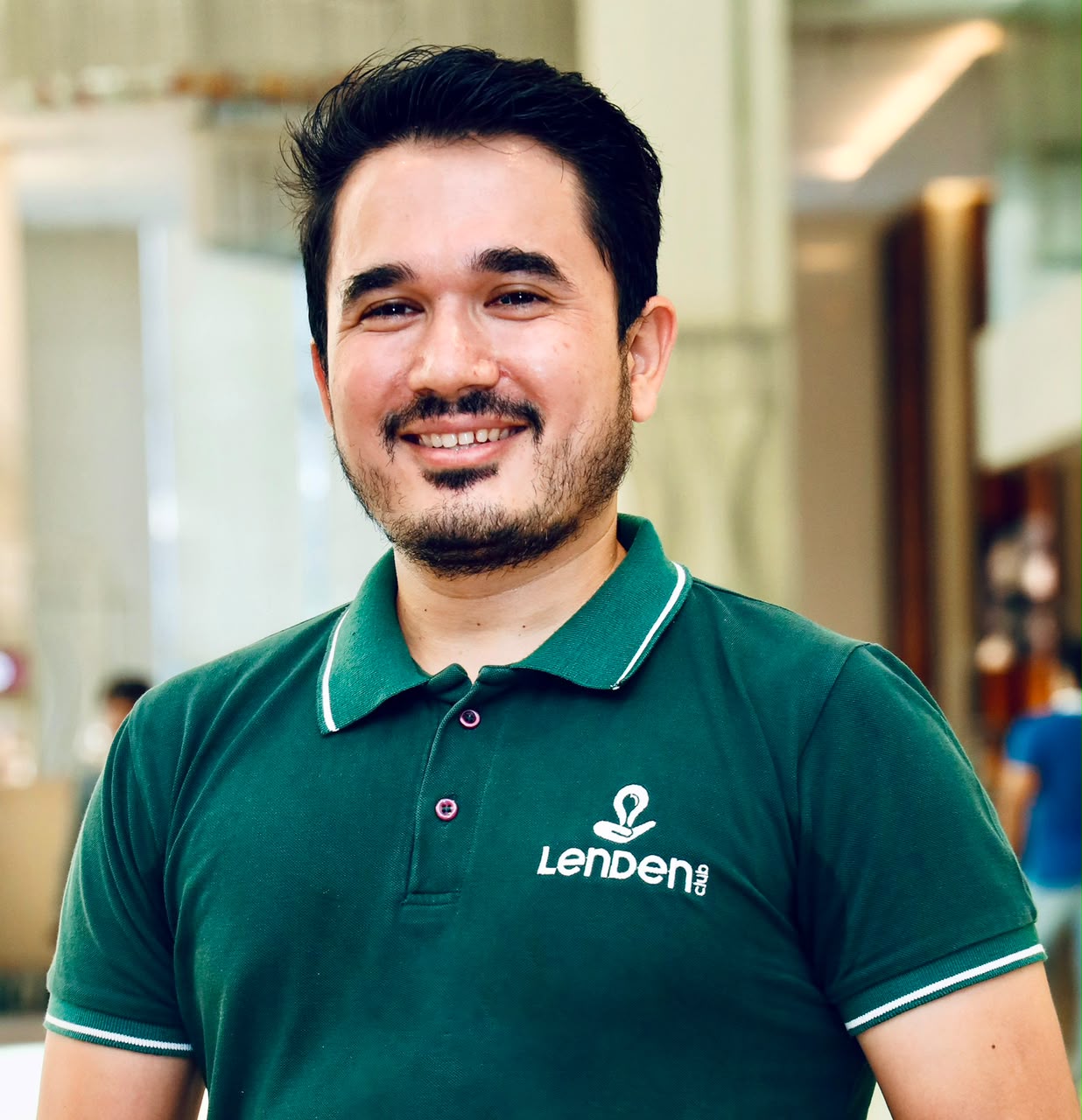
COMPEX Scholarship Success Story - Dipesh Karki, Co-founder of LenDenClub
Mr. Dipesh Karki, Co-founder of LenDenClub, one of India's leading peer-to-peer lending platforms, shared his experience with the Embassy of India in Nepal. He reflected on the role of the COMPEX Scholarship and his experiences in India, and how they helped shape his entrepreneurial journey. The interview is presented below:
Q . Could you briefly share your early life journey from growing up in Khotang in Nepal to becoming a successful entrepreneur?
Dipesh Karki : I come from a teacher’s family with roots in Hauchur, a remote village in Khotang district of Nepal. Although I spent much of my childhood studying in Biratnagar, the values that shaped me came from my family and my village.
My parents were both school teachers, but teaching alone was not enough to support our aspirations. Like many families in rural Nepal, they supplemented their income through farming. They taught during the day and worked on our farmland, selling whatever produce they could so that my brother and I could receive a good education.
My brother and I spent much of our student life living in simple hostels and schools away from home. We were not raised with abundance, but we were raised with discipline, honesty, resilience, and the belief that education could change lives.
As a child, I was fascinated by gadgets, tools, electronics, machines but mostly, aeroplanes. I was never considered the most studious student, but I was always curious. I loved taking things apart, experimenting, and understanding how things worked. I dreamed of becoming a pilot or an aeronautical engineer, but those ambitions were beyond my family’s financial means.
Everything changed when I earned the COMPEX Scholarship and received the opportunity to study Electronics and Communication Engineering at the National Institute of Technology (NIT) Kurukshetra in India. That opportunity opened a completely new world for me.
After graduating, I entered entrepreneurship, first co-founding an engineering software called PipeISO and later co-founding LenDenClub in Mumbai with my partner Bhavin Patel. Today, LenDenClub has become one of the world’s largest peer-to-peer lending platforms, serving more than 30 million customers.
Looking back, my journey has been shaped by three things: the values I inherited from Nepal, the opportunities I received through education, and the determination to keep moving forward even when the path ahead was uncertain.
Q . Looking back, what inspired you to establish LenDenClub, and how did your personal experiences contribute to the idea behind the platform ?
Dipesh Karki : The inspiration for LenDenClub goes back to my childhood.
In my ancestral village, there were no banks or financial institutions. When people needed money for healthcare, farming, education, emergencies, or family occasions, they relied on neighbors, relatives, and trusted members of the community. My parents, who were school teachers, were often among the people villagers approached for financial help.
As a child, I watched how trust-based lending helped people overcome challenges and improve their lives. I saw capital flowing through relationships, trust, and community long before I understood finance.
Years later, after studying engineering and gaining exposure to technology, I realized that this same concept could be modernized and scaled. I grew up watching capital flow through trust-based village relationships in Khotang. Through education, technology, and entrepreneurship, I spent the next two decades trying to modernize that same idea for millions of people.
Receiving the COMPEX Scholarship also created a deep sense of responsibility in me. Nepal invested in my upbringing and values, while India invested in my education and opportunities. I always felt that the best way to honor that responsibility was not through words, but by building something meaningful that could create opportunities for millions. LenDenClub became one such effort.
At its core, LenDenClub is not just about lending. It is about enabling access to opportunity.
Q. You received the COMPEX Scholarship in 2007-08 to study Electronics and Communication Engineering at National Institute of Technology Kurukshetra. How did this opportunity shape your academic, professional, and entrepreneurial journey, and what impact did it have on your life?
Dipesh Karki : The COMPEX Scholarship was one of the most defining moments of my life.
I secured the 20th rank in the scholarship examination and received a fully funded opportunity to pursue engineering in India. At that time, I was probably the first person in my extended family and relatives’ circle to pursue higher education entirely on scholarship.
Preparing for the examination was a lesson in discipline and perseverance. I often slept only three hours a day. I would wake up early, walk to coaching classes, return, and spend the rest of the day studying. My parents were back in our village in Khotang and were largely unaware of the intensity of my preparation. However, my relatives in Kathmandu witnessed it firsthand and were often surprised by the effort I was putting in.
When the results were announced, many people were proud, while others were genuinely surprised. For my family, it was not just my achievement—it was validation of years of sacrifice.
The scholarship significantly reduced the financial burden on my parents, who had spent years balancing their responsibilities as teachers and farmers to support our education.
The greatest value of a scholarship is not financial support; it is the confidence it gives you. A scholarship tells a young student from a small town that someone believes in their potential even before the world does.
Academically, COMPEX gave me access to world-class engineering education. Professionally, it opened doors that I could never have imagined. Entrepreneurially, it exposed me to diverse ideas, people, cultures, and opportunities that ultimately shaped my future.
The scholarship opened a door. My family gave me values. Nepal gave me roots. India gave me a platform to learn, experiment, build, and scale.
Q. Coming from Nepal and studying in India during a period of technological and economic growth, what were the most valuable lessons and experiences you gained that later helped you build and scale LenDenClub ?
Dipesh Karki : When I arrived at NIT Kurukshetra, it was an eye-opening experience.
At that time, internet access was still limited, and much of my learning came from books, quizzes, and self-study. Suddenly, I found myself surrounded by students from across India, NRIs, and a few foreigners, exposed to larger campuses, advanced laboratories, emerging technologies, and entirely new ways of thinking.
One of the biggest lessons was that education extends far beyond the classroom.
I became one of the founding members of the SuryaKiran Aeromodelling Club, which allowed me to reconnect with my childhood dream of aviation. Along with seniors and mentors, we built RC aircraft, learned aerodynamics, electronics, and flight systems, and eventually I became the first certified RC flyer of the college.
Beyond academics, I took leadership roles in multimedia and design initiatives, student societies, technical festivals, cultural events, and fundraising activities. These experiences taught me leadership, teamwork, communication, execution, and problem-solving - skills that later became invaluable in entrepreneurship.
Perhaps the most important realization was that exposure expands ambition.
Studying and working across borders helped me understand how much untapped potential countries like Nepal possess. It reinforced my belief that learning should not be limited by geography. The more we expose ourselves to new ideas and possibilities, the more we expand our own horizons.
Q . India has emerged as one of the world’s leading startup and fintech ecosystems. How did India’s economic growth, digital transformation, and entrepreneurial environment contribute to your success as the co-founder of LenDenClub ?
Dipesh Karki : India’s startup ecosystem provided an extraordinary environment for innovation and scale.
One of India’s greatest strengths is that solutions built here often address challenges faced by hundreds of millions of people. Entrepreneurs are encouraged to solve large-scale problems while keeping solutions affordable, accessible, and practical.
Over the last decade, India has undergone a remarkable digital transformation. Digital identity systems, financial inclusion initiatives, digital payments infrastructure, and technology adoption have fundamentally changed how services are delivered.
For fintech companies like LenDenClub, this transformation created the foundation upon which innovation could thrive.
Equally important was the entrepreneurial culture. India offers access to talent, mentors, investors, regulators, customers, and an ecosystem that encourages experimentation. The Reserve Bank of India’s progressive regulatory framework for peer-to-peer lending played a crucial role in enabling responsible innovation.
Educational investments create long-term bridges between nations.
My own journey reflects that principle. A scholarship enabled me to study in India. Years later, that opportunity helped me build a company serving millions of people. This demonstrates how educational cooperation can create value not only for individuals but also for societies and economies across borders.
Q . As a COMPEX scholar who went on to become a successful entrepreneur, what role did your education, mentors, and professional networks in India play in helping you identify opportunities and overcome challenges in your entrepreneurial journey ?
Dipesh Karki : They played a tremendous role.
At NIT Kurukshetra, I was fortunate to be surrounded by mentors, seniors, professors, and peers who encouraged exploration beyond academics.
One of my seniors, Kamalkant Gaur, inspired the creation of the SuryaKiran Aeromodelling Club. Through mentors such as Jagdeep Kapil and Brijesh Kapil, we learned not only the technical aspects of aeromodelling but also the importance of turning ideas into reality through collaboration and persistence.
Other mentors and seniors encouraged me to explore leadership, multimedia design, technology events, and student organizations. These experiences broadened my perspective and gave me confidence to take initiative.
My first startup, PipeISO, taught me patience and perseverance. Building technology is challenging, but selling what you build is often even harder. Our first customer was BARC India, and the journey taught me that trust, consistency, and long-term thinking matter immensely.
One lesson I learned early is that a problem appears large only until your determination to break it into smaller pieces and solve it becomes larger than the problem itself.
I was never the most studious student in the room. But I was often the one willing to stay the longest, work the hardest, and keep going even after others may have stopped.
Q . What message would you like to share with current and future COMPEX Scholarship recipients from Nepal about making the most of their education in India and using those opportunities to create meaningful impact in their careers and communities ?
Dipesh Karki : My message is simple:
Don’t use the scholarship merely to earn a degree. Use it to expand your horizon.
The true value of studying abroad lies not only in academics but in exposure to new people, ideas, cultures, and possibilities.
Learn globally, build globally, and contribute back.
I encourage students to remain curious, take initiative, participate beyond the classroom, build meaningful relationships, and never stop learning.
Nepal has immense untapped potential. Our next chapter should be innovation, research, entrepreneurship, and institution building. We should aspire not only to be known for Everest, Buddha, Pashupatinath, Gorkhalis, and our rich heritage, but also for producing world-class scholars, researchers, innovators, entrepreneurs, and institutions.
I strongly believe that programs like COMPEX have already transformed thousands of lives. Expanding access to premier institutions such as IITs, IIMs, AIIMS, IHMs and other world-class centers of learning—and eventually building similar institutions and collaborations in Nepal—can help create a new generation of researchers, entrepreneurs, technologists, and leaders for both countries.
I also welcome ongoing efforts to strengthen educational quality, accessibility, curriculum modernization, merit-based opportunities, and research ecosystems in Nepal. Education remains one of the most powerful tools for creating a fairer, stronger, and more prosperous society.
Today, I continue to engage with policymakers, regulators, entrepreneurs, and ecosystem builders across both countries. I have had the opportunity to contribute to discussions around peer-to-peer lending and financial innovation in Nepal, and I would be happy to continue contributing through mentoring, knowledge-sharing, policy discussions, and institution building.
If there is one thing I have learned from my journey, it is this:
A boy from a teacher’s family in remote Khotang received a scholarship from India, built one of the world’s largest digital lending infrastructure, and now hopes to use that experience to create opportunities for the next generation across both Nepal and India.